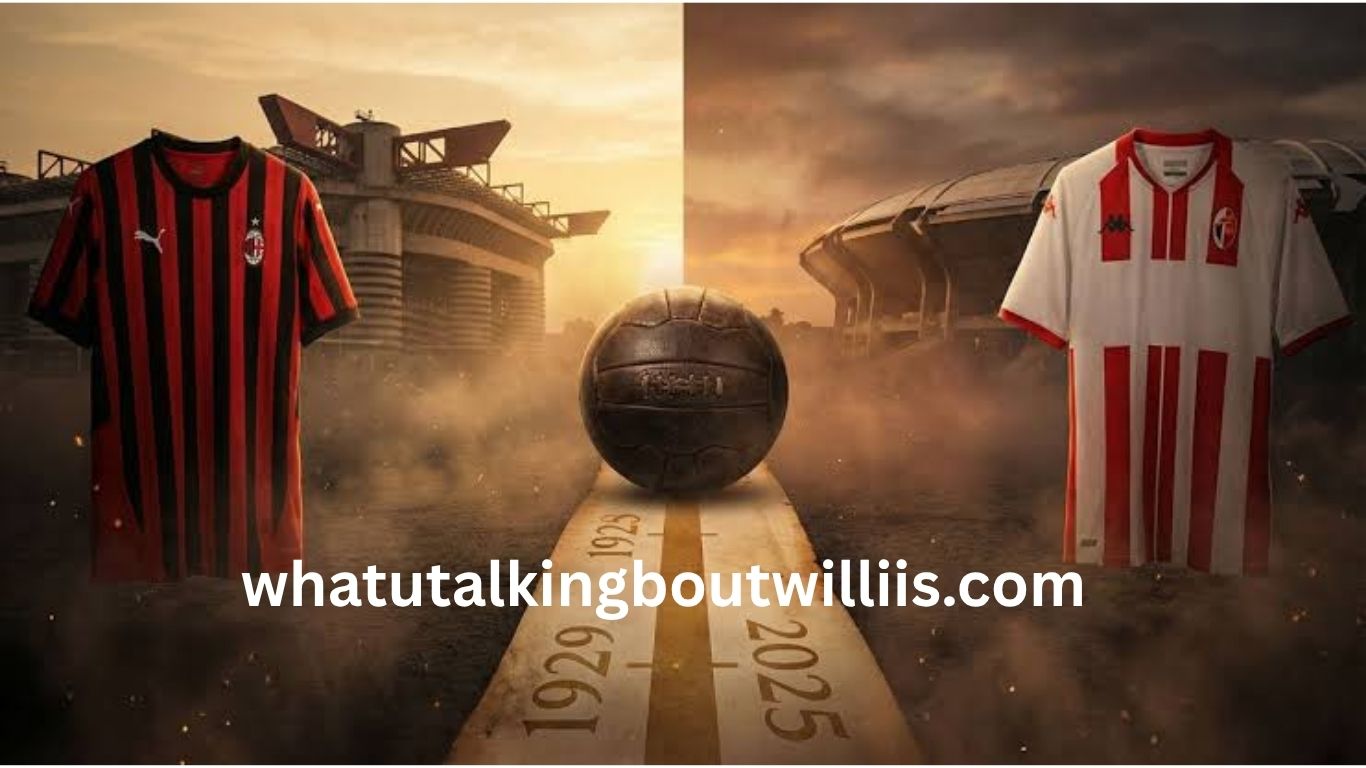
Italian football has always been filled with legendary rivalries. The Milan Derby, Juventus vs Inter, and Roma vs Lazio dominate headlines across the world. Yet hidden beneath those glamorous clashes lies another fascinating story — the long and dramatic AC Milan vs SSC Bari timeline.
This rivalry is not built on equal power or shared success. Instead, it represents something deeper: the clash between a football giant and a determined underdog. AC Milan, one of the most decorated clubs in world football, has spent decades competing for trophies, European glory, and international recognition. SSC Bari, on the other hand, has often battled for survival, fighting through promotions, relegations, and financial struggles.
Despite the enormous gap between the clubs, their meetings have consistently delivered unforgettable moments. Since their first official encounter in 1929, Milan and Bari have faced each other in dramatic Serie A battles filled with shocking upsets, legendary players, and emotional football stories.
The AC Milan vs SSC Bari timeline is more than just statistics and results. It is a reflection of Italy itself — north versus south, wealth versus resilience, and prestige versus passion.
The Beginning of the Rivalry (1929–1940)
The story officially began in 1929 when Italian football introduced a national league structure. Serie A was entering a new era, bringing clubs from every region of Italy together in a single competition.
AC Milan already carried significant reputation and ambition. Based in the wealthy industrial north, the Rossoneri were building themselves into one of Italy’s strongest clubs. Bari represented something very different. The southern club arrived with determination, pride, and the desire to prove that teams from southern Italy could compete with the established powers.
Their first meeting ended in a 2-2 draw, an impressive result for Bari against one of the country’s most respected sides. That match immediately showed that Bari would not simply accept defeat against bigger clubs.
Throughout the 1930s, Milan generally dominated the fixture. Their superior resources, tactical organization, and stronger squads usually gave them the advantage. However, Bari developed a reputation for physical football, passionate defending, and relentless fighting spirit.
The rivalry during these years symbolized the growing divide within Italian football. Northern clubs possessed greater financial stability and infrastructure, while southern clubs often relied on local talent and emotional support from their communities.
Even in defeat, Bari’s identity as a fearless underdog began taking shape.
The Post-War Era and Milan’s Dominance (1941–1955)
Following World War II, Italian football experienced massive transformation. Clubs rebuilt their squads, stadiums reopened, and Serie A slowly regained its competitive quality.
For AC Milan, this era marked the beginning of true dominance.
The Rossoneri assembled talented attacking players and became one of the most entertaining teams in the country. Their matches against Bari often highlighted the enormous gap in quality between the clubs.
One result from this period remains unforgettable.
In 1949, Milan destroyed Bari 9-1 in one of the most one-sided matches in Serie A history. It still stands as the largest victory margin in the AC Milan vs SSC Bari timeline.
Milan’s attack overwhelmed Bari from the opening minutes. Their passing, movement, and finishing looked unstoppable. For Bari supporters, the defeat was painful, yet it also reinforced the club’s identity as a team willing to continue fighting despite impossible odds.
The post-war years established an important pattern in the rivalry:
- Milan represented excellence and ambition.
- Bari represented resilience and survival.
That contrast would define the fixture for generations.
The Golden Years of Italian Football (1956–1975)
Italian football entered a golden age during the 1950s, 60s, and early 70s. Serie A became home to some of the greatest footballers in the world, and AC Milan emerged as one of Europe’s elite clubs.
The Rossoneri dominated domestically and internationally with stars like Gianni Rivera, Cesare Maldini, and Kurt Hamrin. Milan’s elegant tactical football earned admiration across Europe, while their trophy collection continued growing.
Bari lived a very different reality.
The southern club regularly moved between Serie A and Serie B, struggling to maintain long-term stability. Financial limitations prevented Bari from competing with Italy’s major clubs in the transfer market.
Yet Bari remained dangerous at home.
Matches played in Bari often became emotional battles fueled by passionate local supporters. Southern Italian football culture brought incredible intensity to these games, creating hostile environments even for powerful teams like Milan.
One of the most memorable moments arrived when Bari shocked Milan with a surprise victory during the late 1970s. Though Milan remained the stronger side overall, Bari proved that passion and determination could sometimes overcome superior talent.
For Bari fans, victories against Milan carried enormous emotional value. Defeating one of Italy’s football giants felt like a victory for the entire city.
The Dutch Revolution and Tactical Brilliance (1976–1995)
The late 1980s and early 1990s transformed AC Milan into one of the greatest football teams ever assembled.
Under legendary manager Arrigo Sacchi, Milan introduced revolutionary tactical ideas based on pressing, compact defending, and aggressive attacking movement. The club’s famous Dutch trio — Marco van Basten, Ruud Gullit, and Frank Rijkaard — became symbols of football perfection.
Facing Milan during this era was a nightmare for most Italian clubs, including Bari.
In 1986, Milan produced a devastating 5-0 victory over Bari, showcasing their incredible attacking quality. Van Basten’s finishing ability and Gullit’s power completely overwhelmed Bari’s defense.
But even during Milan’s most dominant years, Bari continued fighting.
That is what made the rivalry interesting.
Bari rarely entered matches as favorites, yet their players consistently approached the games with courage and intensity. The underdog spirit remained central to the fixture.
Legendary Players Connected to Both Clubs
Several notable footballers created historical links between Milan and Bari over the years.
Antonio Cassano
Born in Bari, Cassano became one of Italy’s most talented and controversial footballers. Though he later played for Milan, his roots remained deeply connected to Bari.
Leonardo Bonucci
Bonucci developed early in his career at Bari before becoming one of Italy’s top defenders and eventually joining Milan later in his career.
Gianluca Zambrotta
The World Cup-winning fullback also connected both clubs through different stages of his football journey.
These players helped strengthen the historical relationship between Milan and Bari.
The Modern Football Era (1996–2010)
Football changed dramatically during the late 1990s and early 2000s. Television revenue, sponsorship deals, and international marketing transformed elite clubs into global brands.
AC Milan adapted perfectly.
The Rossoneri built squads filled with superstars including Paolo Maldini, Kaká, Andrea Pirlo, Clarence Seedorf, Alessandro Nesta, and Andriy Shevchenko. Milan conquered Europe once again, winning UEFA Champions League titles and remaining among the world’s strongest clubs.
Bari continued facing financial and sporting challenges.
The club spent several seasons outside Serie A, making meetings between the sides increasingly rare. However, whenever Bari returned to the top division, matches against Milan remained highly anticipated events.
One reason the rivalry survived despite long gaps was the emotional contrast between the clubs.
Milan symbolized international success and football luxury.
Bari symbolized local pride and persistence.
That contrast gave every meeting special meaning.
The Famous 2011 Encounter
One of the most memorable modern matches took place on March 13, 2011.
AC Milan entered the game leading the Serie A table and chasing another league title. With stars like Zlatan Ibrahimović, Robinho, Alexandre Pato, and Thiago Silva, Milan looked unstoppable.
Bari arrived at the San Siro sitting near the bottom of the league.
Nobody expected them to compete seriously.
Yet football always creates surprises.
Bari delivered a fearless performance against the league leaders, frustrating Milan throughout the match and shocking supporters inside the stadium. The result became another iconic chapter in the AC Milan vs SSC Bari timeline, proving once again that underdogs can challenge giants.
For Bari supporters, performances like these became treasured memories.
Tactical Evolution of the Rivalry
Over nearly a century, the tactical styles of both clubs evolved dramatically.
Milan’s Philosophy
AC Milan traditionally emphasized:
- Technical quality
- Tactical discipline
- Possession-based football
- Strong defensive organization
From Rivera to Sacchi to Ancelotti, Milan often represented tactical innovation in world football.
Bari’s Identity
SSC Bari usually relied on:
- Physical intensity
- Counterattacking football
- Defensive resilience
- Emotional home support
While Milan often controlled possession, Bari frequently depended on energy, determination, and quick transitions.
This stylistic contrast made the rivalry entertaining despite Milan’s historical dominance.
Statistical Overview of the Rivalry
Historically, AC Milan has dominated the head-to-head record.
Key Statistics
- First official match: 1929
- Biggest win: Milan 9-1 Bari (1949)
- Total official meetings: More than 70
- Main competition: Serie A
Despite Milan’s superior record, Bari managed several memorable victories and draws that remain celebrated by supporters.
Cultural Importance Beyond Football
The AC Milan vs SSC Bari timeline also reflects broader Italian culture and history.
Northern Italy traditionally enjoyed greater industrial wealth and economic development. Southern Italy often faced financial challenges and social struggles.
These differences influenced football.
Milan became a global football institution with international stars and massive investment. Bari relied more heavily on regional identity and passionate community support.
For many Bari supporters, matches against Milan represented more than football. They symbolized resistance against Italy’s football hierarchy.
That emotional layer gives the rivalry lasting importance even when the clubs compete in different divisions.
The Rivalry in Modern Football
As football continues evolving, the rivalry remains part of Italian football history.
Although Milan regularly competes at the top level while Bari spends much of its time outside Serie A, supporters still remember the unforgettable moments shared between the clubs.
Modern football fans often focus only on major derbies and title races, but rivalries like Milan vs Bari reveal another side of the sport — one built on pride, struggle, and emotional connection.
Every time Bari faced Milan, they carried the hopes of every underdog club in Italy.
And every time Milan stepped onto the pitch, they represented the standards and expectations of football greatness.
Conclusion
The AC Milan vs SSC Bari timeline is not a rivalry defined by equality.
It is defined by contrast.
One club built a global legacy filled with European Cups, legendary players, and worldwide fame. The other built its identity through resilience, survival, and unforgettable moments of courage.
Yet that is precisely what makes the rivalry special.
Football history is not only about champions. It is also about the teams that refuse to surrender against impossible odds.
From their first meeting in 1929 to modern Serie A encounters, Milan and Bari have created a story filled with drama, emotion, and unforgettable football memories.
The giant often won.
But the underdog never stopped believing.




After looking at a number of the articles on your web page, I truly like your way of writing
a blog. I saved as a favorite it to my bookmark website list and will be checking back soon. Please check out my website as well and tell me your opinion.