After-school programs are no longer merely sources of amusing supervision or school support. In the modern day and age, there is a growing number of parents seeking a stimulating environment that can assist their children in achieving success academically, creatively and mentally after school. Consequently, After School Club Providers are as well incorporating modern learning paradigms, enhanced technological learning activities, and wholesome development practices in their services to accommodate the modern demands. These trends are signs of a more profound shift in the world of higher education, where education is now more affected by interest, flexibility, and practicality, instead of residing in classes or in rigid courses.
Another Direction of the Mission of After-School Clubs: Having Care to Enrichment.
Previously, after-school programs were mainly designed to assist parents who were working with their children. The current efforts in the modern day would be more focused on skill training and development, although the safety and monitoring factors are also taken into consideration. Parents do not necessarily keep the company of those they consider to be more compatible with a formal education; hence, some groups are taken to spend more time, rather than a method of time-wasting. This has resulted in the increased popularity of structured learning programs that focus on the development of the imagination, critical thinking and problem-solving skills. To make the process of learning interesting and engaging, the children are, in most cases, advised to go further into the subjects asis usually practised.
STEM and Technology-Based Education Programs.
One of the most notable changes in after-school programs is the growing emphasis on STEM education. Courses relating to science, engineering, technology, and mathematics have been on the increase because parents have realised the role played by these courses as being future-ready. Currently, most organisations offer robotics classes, code classes, and simpler engineering problems. Besides encouraging critical thinking and creativity, these activities enable the kids to be familiar with technology as they get exposed to challenging concepts at their age level.
The Creative Arts and Expression as a learning Resource.
Creative arts have continued to play a significant role in modern instruction in after-school programs despite the attention of STEM programs. Art, music, theatre and literary fiction clubs are being reshaped to encourage emotional intelligence and self-expression. Such programs encourage children to cooperate with peers, exchange tales, and express their opinions instead of focusing on technical skills. Along with the creation of an antagonist to learning that is more academically oriented, the creativity activities also improve communication skills and self-confidence.
Making Social and Emotional Learning the Priority.
Another trend is the integration of emotional and social development into post-school programs. As the modern world of learning knows, achievement in school and emotional health are closely connected. As a popular activity in clubs, more and more activities are aimed at building cooperation, empathy, leadership, and self-awareness. Group projects, role play and mediated conversations help children learn to control their emotions, resolve disagreements, and build strong relationships.
Small Groups and Personalised Learning Models.
The growing relevance of personalisation in education is not an exception in the case of after-school clubs. Modern programs apply small group models in order to bring events to suit different learning styles and skill levels. Such an approach allows educators to offer personalised attention to the students and tailor instructions based on their interests and strong areas. Bespoke education also enables kids to learn at their own pace, as well as enhancing engagement, reducing stress and enhancing motivation.
Integrating Physical and Educational Training.
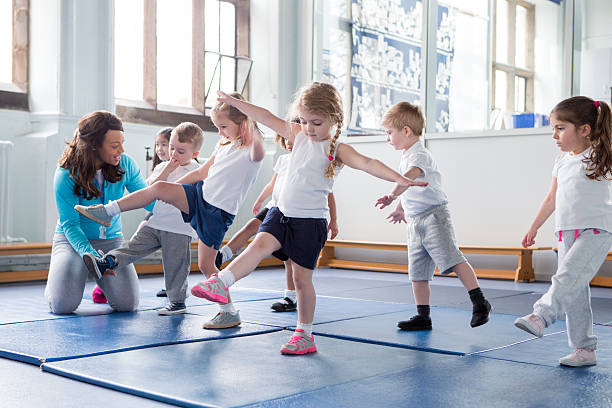
After-school club design is usually health- and well-being-oriented. To encourage both physical and mental development, contemporary programs often combine learning materials and physical activities. Sports-based learning, yoga, dancing and movement-based activities help children to remain active and build concentration and discipline. Several activities with a physical challenge are integrated into the academic learning through team problem-solving projects or outdoor research projects. The whole strategy acknowledges the strong association between good health (physical health) and educational success.
Digital Learning and Hybrid Programs Models.
Technology has transformed the manner in which after-school clubs are operated and provided materials. Nowadays, face-to-face meetings are usually enhanced with the use of digital learning platforms, interactive applications, and online materials. To gain more freedom for the families, certain clubs provide hybrid models that combine both real-life events and online education. Virtual clubs have also developed, and kids have been able to participate in tailor-made programs anywhere.
Final words
Tendencies in after-school clubs apparently indicate a shift towards comprehensive, progressive learning programs that enhance the entire child. Contemporary after-school clubs are reconsidering learning beyond the classroom by combining academic enhancement, imagination, emotions and practical expertise.