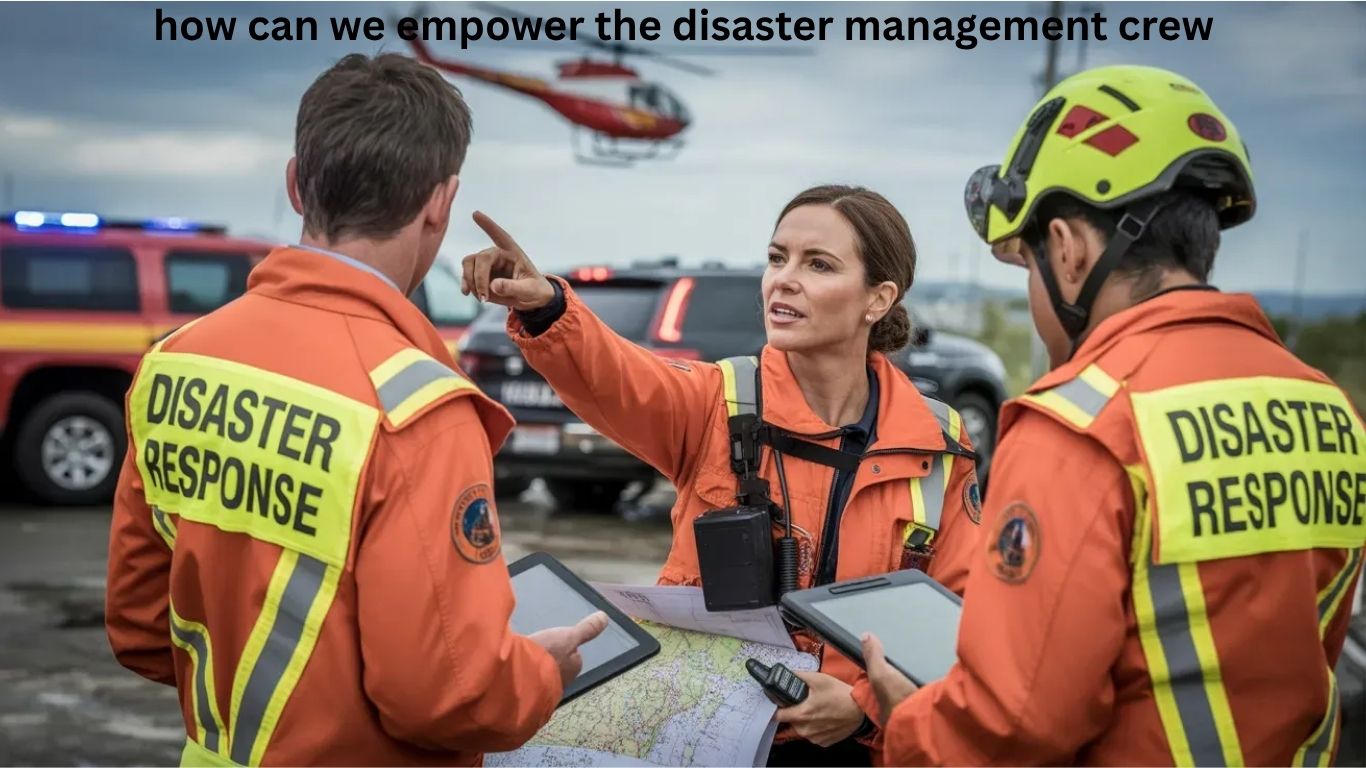
Natural disasters, humanitarian crises, industrial accidents, and climate-related emergencies are increasing across the world. Floods, earthquakes, wildfires, hurricanes, pandemics, and landslides continue to challenge governments and communities every year. During these critical situations, disaster management crews become the backbone of rescue and recovery operations. These professionals risk their lives to protect others, provide emergency assistance, and restore stability in chaotic environments.
However, the effectiveness of disaster management teams depends greatly on the support, resources, and preparation they receive. Empowering disaster management crews is not just about providing emergency equipment. It involves building stronger systems, improving education, integrating advanced technology, supporting mental health, and encouraging collaboration between agencies and communities.
When disaster response teams are properly trained and supported, they can save more lives, reduce damage, and help communities recover faster. Empowerment creates confidence, resilience, and operational efficiency that are essential during emergencies. Understanding how to strengthen these teams is now more important than ever in a world facing increasingly unpredictable disasters.
The Importance of Disaster Management Crews
Disaster management crews play a vital role before, during, and after emergencies. Their responsibilities extend beyond rescue operations. They also work in disaster preparedness, risk assessment, evacuation planning, medical assistance, recovery coordination, and public safety awareness.
These teams often include firefighters, paramedics, police officers, medical professionals, military personnel, engineers, volunteers, and humanitarian workers. Each member contributes unique expertise that supports the overall emergency response process.
In many disasters, the first few hours are the most critical. Quick decision-making, organized coordination, and immediate action can determine whether lives are saved or lost. Empowered disaster crews are better equipped to handle these high-pressure situations efficiently and safely.
As climate change increases the frequency and severity of natural disasters worldwide, governments and organizations must prioritize investment in disaster management systems. Supporting emergency responders is no longer optional; it is a necessity for public safety and national resilience.
Advanced Training and Skill Development
One of the most effective ways to empower disaster management crews is through advanced training and continuous education. Emergency situations evolve rapidly, and responders must constantly update their knowledge and skills to remain prepared for modern challenges.
Training should cover a wide range of disaster scenarios, including floods, earthquakes, cyclones, pandemics, chemical accidents, and urban fires. Each type of disaster requires specialized response techniques and safety protocols.
Practical simulation exercises are especially important. Mock drills and disaster simulations allow crews to experience realistic emergency conditions in a controlled environment. These exercises improve decision-making, communication, teamwork, and coordination under pressure.
Disaster management training should include both technical and non-technical skills. Technical skills involve rescue operations, first aid, emergency medical care, fire suppression, hazard assessment, and equipment handling. Non-technical skills include leadership, emotional intelligence, crisis communication, and situational awareness.
Continuous education programs also help responders stay informed about new disaster response strategies, scientific research, and technological advancements. Workshops, certifications, online courses, and seminars ensure that disaster crews remain adaptable in an ever-changing world.
Training should not only focus on professionals but also include volunteers and local responders. Community-level preparedness creates stronger emergency networks and reduces dependence on external assistance during major disasters.
The Role of Technology in Modern Disaster Response
Technology has become one of the most powerful tools in disaster management. Modern digital systems help emergency crews respond faster, gather accurate information, and improve operational efficiency.
Geographic Information Systems (GIS) are widely used to map disaster zones and monitor real-time conditions. GIS technology helps responders identify affected regions, blocked roads, damaged infrastructure, and vulnerable populations. Accurate mapping allows resources to be distributed more effectively.
Drones are another major advancement in disaster response. Equipped with cameras and sensors, drones provide aerial surveillance of disaster areas that may be difficult or dangerous for humans to access. They help locate survivors, assess damage, and guide rescue operations more efficiently.
Artificial intelligence and predictive analytics are also transforming disaster management. AI systems can analyze weather patterns, identify high-risk areas, and predict the impact of natural disasters before they occur. Early warning systems powered by AI can provide valuable time for evacuation and preparedness.
Reliable communication systems are equally essential. During disasters, traditional communication networks often fail due to infrastructure damage. Emergency responders require dependable radio systems, satellite communication devices, and digital platforms to stay connected.
Mobile applications designed for disaster management also improve coordination. These apps can provide real-time alerts, emergency maps, shelter information, evacuation routes, and medical support details directly to responders and affected communities.
By integrating advanced technology into emergency operations, disaster management crews can improve speed, accuracy, and safety during crisis situations.
Strengthening Mental Health Support
Disaster response work is emotionally and physically demanding. Responders frequently witness destruction, injuries, death, and human suffering. Long working hours, sleep deprivation, and high-pressure environments can lead to severe stress and emotional exhaustion.
Mental health support is therefore a critical part of empowering disaster management crews. Without proper psychological care, responders may experience burnout, anxiety, depression, or post-traumatic stress disorder.
Organizations should provide access to professional counseling services, therapy programs, and mental health workshops. Psychological first aid training can also help responders support one another during stressful situations.
Creating a workplace culture that encourages open discussions about mental health is extremely important. Many emergency responders avoid seeking help because of stigma or fear of appearing weak. Leadership teams must promote an environment where emotional well-being is treated as a priority.
Regular debriefing sessions after disaster operations can help teams process traumatic experiences. Peer support programs also provide emotional comfort by allowing responders to share their experiences with colleagues who understand the challenges of emergency work.
Physical wellness programs contribute to mental resilience as well. Proper nutrition, exercise, adequate rest, and recovery time help responders maintain emotional stability and physical strength during demanding deployments.
Protecting the mental health of disaster crews improves morale, strengthens teamwork, and enhances overall operational performance.
Community Engagement and Public Awareness
Communities themselves play a major role in successful disaster management. An informed and prepared population can significantly reduce pressure on professional responders during emergencies.
Public awareness campaigns help educate citizens about disaster preparedness, evacuation planning, emergency communication, and safety procedures. Schools, workplaces, and local organizations can all contribute to spreading awareness.
Community-based disaster response training programs are especially effective. Teaching volunteers basic first aid, rescue techniques, and emergency response skills creates a network of local support during disasters.
Prepared communities respond faster and cooperate more effectively with professional rescue teams. This collaboration allows emergency crews to focus on the most critical operations while community members assist with local support activities.
Local residents also possess valuable knowledge about their environment, infrastructure, and vulnerable areas. Involving communities in disaster planning improves the accuracy and effectiveness of response strategies.
Strong community engagement builds trust between citizens and emergency services. It also creates a culture of shared responsibility where disaster preparedness becomes everyone’s concern rather than solely the government’s responsibility.
Interagency Collaboration and Coordination
Large-scale disasters often require multiple agencies to work together. Fire departments, police forces, medical teams, military units, humanitarian organizations, and local governments must coordinate their efforts effectively.
Poor communication and lack of coordination can create confusion, delays, and operational failures during emergencies. Therefore, empowering disaster management crews also means strengthening interagency collaboration.
Clear communication protocols and unified command systems are essential. Every organization involved in disaster response should understand its responsibilities and coordination procedures before emergencies occur.
Joint training exercises are highly beneficial because they allow agencies to practice working together in realistic scenarios. These drills improve teamwork, communication, and problem-solving under pressure.
Regular meetings and information-sharing sessions between agencies also strengthen relationships and preparedness. Lessons learned from previous disasters can help organizations improve future response strategies.
International cooperation is becoming increasingly important as well. Major disasters often exceed the capabilities of individual countries, requiring global humanitarian support and resource sharing.
Strong collaboration ensures faster response times, better resource allocation, and more efficient rescue operations during crises.
Leadership and Decision-Making in Emergencies
Leadership plays a critical role in disaster management. During emergencies, leaders must make quick decisions, manage limited resources, and maintain order under highly stressful conditions.
Empowering disaster crews requires developing skilled leaders who can guide teams effectively during chaotic situations. Leadership training should focus on crisis management, communication, ethical decision-making, and strategic planning.
Strong leaders inspire confidence and motivate teams even during difficult circumstances. They also help maintain discipline, coordination, and morale throughout disaster operations.
Decision-making skills are equally important because emergencies often involve uncertainty and rapidly changing conditions. Leaders must assess risks, prioritize actions, and adapt strategies quickly.
Scenario-based leadership training programs can help emergency managers strengthen their critical thinking and problem-solving abilities. Practical experience gained through simulations improves confidence and preparedness for real-life disasters.
Effective leadership ultimately increases operational efficiency and helps save more lives during emergencies.
Investing in Equipment and Infrastructure
No disaster management crew can operate effectively without proper equipment and infrastructure. Governments and organizations must invest in modern emergency tools and facilities to support responders.
Protective gear, rescue vehicles, medical supplies, firefighting equipment, and communication systems are all essential for safe and efficient disaster response.
Emergency operation centers should be equipped with advanced technology, backup power systems, and reliable data management platforms. These centers serve as coordination hubs during crises and must remain operational under extreme conditions.
Transportation infrastructure is equally important. Damaged roads, bridges, and airports can delay rescue efforts and limit access to affected areas. Investing in resilient infrastructure improves emergency response capabilities and reduces disaster-related losses.
Financial support is another critical factor. Sustainable funding ensures that disaster management agencies can maintain equipment, conduct training programs, and improve preparedness systems continuously.
Preparedness investments may seem costly initially, but they significantly reduce long-term economic losses and human suffering caused by disasters.
The Future of Disaster Management
The future of disaster management will depend heavily on innovation, resilience, and global cooperation. Climate change, urbanization, and population growth are increasing disaster risks worldwide, making stronger emergency systems essential.
Future disaster management strategies will likely involve greater use of artificial intelligence, robotics, satellite monitoring, and predictive analytics. Smart cities may integrate disaster warning systems directly into public infrastructure, improving response speed and community safety.
Virtual reality training simulations may also become more common, allowing responders to experience highly realistic disaster scenarios without physical risk.
At the same time, human compassion, teamwork, and leadership will remain central to effective disaster response. Technology can improve operations, but skilled and empowered people will always be the driving force behind successful emergency management.
Conclusion
Empowering disaster management crews requires more than simply responding to emergencies. It involves building a complete support system that includes advanced training, modern technology, mental health care, strong leadership, community engagement, and interagency collaboration.
Disaster responders dedicate their lives to protecting others during society’s most difficult moments. By investing in their skills, safety, and well-being, governments and communities can create stronger and more resilient emergency response systems.
As disasters continue to increase globally, empowered disaster management crews will play an even more important role in saving lives, reducing destruction, and helping communities recover faster. Supporting these teams today is an investment in a safer and more prepared future for everyone.