Key Takeaways
- Choose treatments according to the room’s sun exposure, privacy needs, and daily routine.
- Layering shades and drapery can provide flexible light control from morning through night.
- Cellular shades, lined panels, and solar shades can help improve comfort near glass.
- Cordless and motorized options can make window coverings safer and easier to operate.
- Careful measuring, mounting, and material selection affect both appearance and performance.
In Lake St. Louis, window treatments need to do more than complement a room’s style. They often need to handle bright summer afternoons, changing winter temperatures, privacy near neighboring homes, and everyday convenience. Whether you are updating one room or planning a whole-home refresh, window blinds repair Lake St. Louis, MO can also be part of a practical strategy for extending the life and performance of existing shades or blinds.
The best choice starts with the problem each window creates. A west-facing family room may need glare reduction, a bedroom may need stronger darkness, and a kitchen window may need a material that is easy to wipe clean. When function comes first, the finished result is more likely to suit the way your Lake St. Louis home is actually used.
Start With the Room’s Main Needs
Before selecting colors, fabrics, or slat sizes, identify the window’s main job. In a Lake St. Louis living room overlooking the yard or lake area, preserving a pleasant view may matter most. In a street-facing bedroom, privacy and darkness may be priorities. Common concerns include heat, glare, nighttime visibility, hard-to-reach windows, noise, safety, and décor.
A quick room-by-room review prevents a one-size-fits-all purchase. Ask when the sun hits the glass, whether indoor lights make the room visible at night, how often the treatment will be adjusted, and whether children or pets can reach it. Also consider nearby furniture, window handles, deep trim, and whether the covering must clear a door or counter.
For homeowners searching for window blinds repair near me, it is helpful to inspect current coverings before replacing them. A loose tilt mechanism, damaged vane, frayed lift cord, or shade that no longer raises evenly may be repairable. At the same time, an outdated treatment may be better replaced with a safer, more efficient design.
Match Treatments to Light Exposure
Window direction has a major effect on comfort. East-facing windows can bring sharp morning light, while west-facing windows may create intense late-day glare and heat. South-facing windows often receive strong, sustained daylight, and north-facing windows generally need less aggressive solar control. Observe each room for a few days before choosing a treatment.
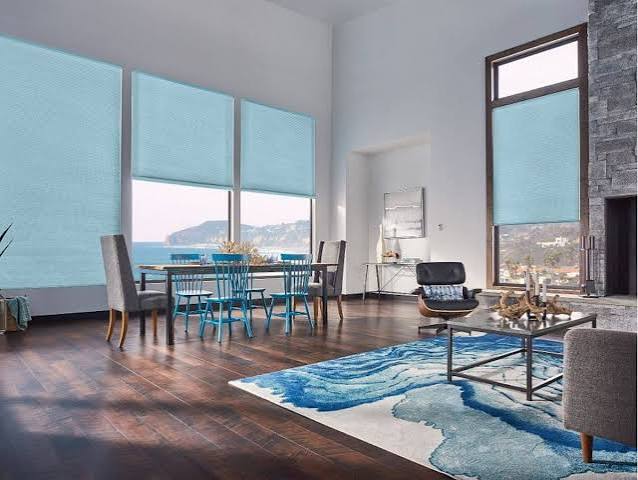
Photorealistic candid lifestyle photo of a homeowner standing in a naturally lit Lake St. Louis living room, comparing sunlight and glare near a west-facing window with a partially lowered solar shade; visible yard outside, everyday furniture, slightly imperfect natural lighting, documentary-style and unposed.
Light-control options range from sheer panels that soften sunlight to light-filtering shades that cut glare while keeping the room bright. Room-darkening shades work well in bedrooms and media areas, while blackout shades or lined drapes offer the strongest results when installed with enough overlap to limit side gaps. Fabric color, weave openness, lining, and mounting position all change how much light reaches the room.
Balance Privacy and Outdoor Views
Daytime privacy is not the same as nighttime privacy. A solar shade may reduce daytime visibility from outside while maintaining outward visibility, but interior lighting after sunset can reverse that effect. Layered treatments are especially useful in Lake St. Louis neighborhoods where homes may face sidewalks, nearby yards, or neighboring windows.
Consider top-down shades for bathrooms and bedrooms, solar shades for view-oriented living spaces, and a shade-and-drapery combination where flexible day-to-night control matters. Privacy sheers can soften the look of a room, but a second layer may still be necessary for evening coverage.
Improve Year-Round Comfort
Window treatments do not replace quality windows, insulation, or well-maintained HVAC equipment, but they can help manage uncomfortable areas around glass. Cellular shades add a layer of trapped air, lined drapery can reduce drafts and light, and exterior shading blocks sunlight before it enters. The energy-saving potential of insulating cellular window shades underscores why these coverings may be worth considering for homes that face both summer cooling demands and winter heat loss.
For best results, use treatments consistently. Close solar-control shades before harsh afternoon sun reaches a west-facing room, then open them when daylight and outdoor views are more welcome. Motorized schedules can make that routine easier to maintain.
Choose by Room
Bedrooms
Prioritize privacy, quiet operation, and sleep-friendly darkness. Blackout roller shades, cellular shades with room-darkening fabric, or lined drapery panels can help create a more restful setting.
Living Rooms and Dining Rooms
These spaces usually benefit from flexibility. Solar shades can reduce screen glare without closing off the view, while Roman shades, woven woods, or drapery panels add a finished decorative layer.
Kitchens and Bathrooms
Choose durable, moisture-conscious materials that are simple to clean. Faux wood blinds, roller shades, and certain cellular or composite products are often more practical than untreated fabric near sinks, cooking areas, and humid bathrooms.
Home Offices
Focus on managing computer-screen glare without turning the room into a cave. Adjustable blinds, solar shades, and top-down options can preserve useful daylight while reducing visual discomfort during the workday.
Consider Smart Controls and Safety
Motorized treatments make sense for tall windows, skylights, large banks of glass, and rooms with predictable routines. A remote, wall control, app, or sun-based schedule can close shades before afternoon heat builds up or open them in the morning without manual adjustments. Before purchasing, check battery access, charging needs, wireless compatibility, manual override features, and control privacy settings.
Safety should remain central to every decision. The safest option for homes with young children is cordless window coverings, according to federal consumer safety guidance. Keep beds, cribs, furniture, and toys away from cords, secure continuous loops properly, and inspect older blinds for damaged hardware or accessible cords.
Measure and Build a Practical Plan
Inside mounts offer a clean, built-in appearance, but they require enough frame depth and accurate measurements. Outside mounts can cover more glass, reduce light gaps, and work well on shallow or uneven frames. Measure width at the top, middle, and bottom, then measure height on the left, center, and right. For an inside mount, use the smallest width measurement unless the product instructions say otherwise.
Finish with a simple plan: list each room’s main concern, note the sun pattern, choose the required privacy and darkness level, select materials suited to the space, review safety needs, and test samples in the actual room. The right window treatment for a Lake St. Louis home is not necessarily the trendiest option. It is the one that keeps the space comfortable, private, attractive, and easy to live with every day.