You sit down to submit a massive grant application just hours before the deadline, and the network crashes. The server is unresponsive. No one in the office can access their email or donor records. Panic sets in.
When technology fails, it does more than disrupt your back office. It pulls your team’s focus away from what matters most. Instead of serving your community, your staff is stuck restarting routers and waiting on hold for tech support.
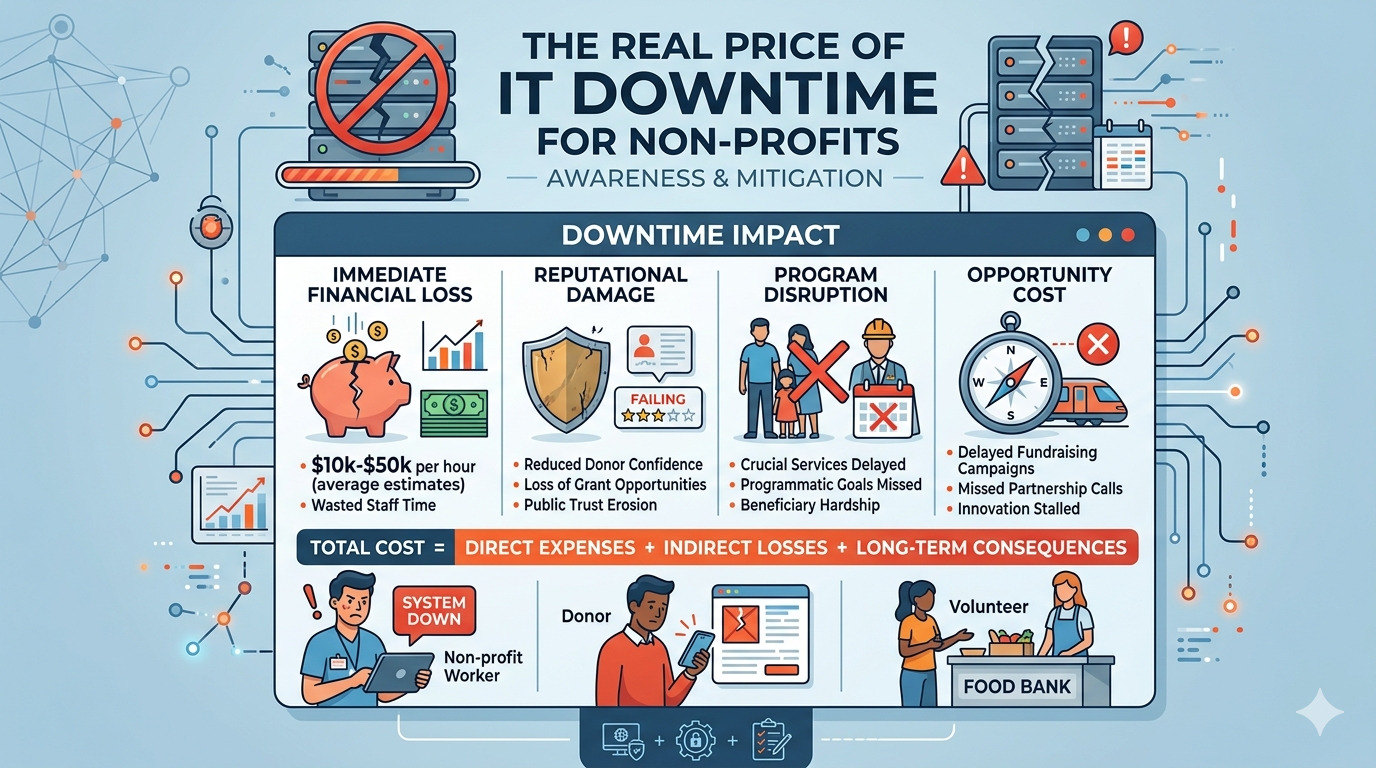
Many operations directors calculate the cost of an outage based on simple math, like lost hours multiplied by hourly wages. But the real price of one hour of downtime goes far beyond immediate revenue loss. It compromises your ability to deliver on your core mission.
You need systems that work as hard as you do. Partnering with specialized IT support for nonprofits transforms your technology from a frustrating burden into a strategic asset that empowers your cause.
The Tangible Financial Toll of an Outage
What is the actual financial cost of one hour of downtime for an organization? For a non-profit operating on a tight budget, the numbers can be shocking. Every minute your systems are offline is a minute you cannot process donations, onboard volunteers, or manage program logistics.
While small organizations might assume they are immune to massive losses, the reality is that unplanned outages drain resources quickly. Outdated systems frequently turn small tech hiccups into massive, unplanned emergency repair bills. If a server dies on a Friday afternoon, you might be forced to pay exorbitant emergency rates to get it fixed over the weekend. These surprise expenses ruin predictable budgeting models. It forces operations directors to pull funds away from actual community programs just to keep the lights on.
Beyond the Balance Sheet: Hidden Operational Costs
Financial losses are easy to measure. The hidden operational costs of an IT outage are much harder to quantify, but they are often more damaging. When systems fail, your team’s productivity drops to zero.
Consider the real-world impact of a network outage on your daily operations. A sudden crash can cause your team to miss crucial grant application deadlines. Stalled donor outreach campaigns mean missed fundraising targets. Even a brief period of slow internet can severely disrupt a carefully planned community event.
Slow, inconsistent IT support forces mission-focused staff to waste hours acting as makeshift tech troubleshooters. Your program directors should not be crawling under desks to check ethernet cables. Your volunteer coordinators should not be spending their afternoons trying to recover a corrupted Excel file.
Every minute your staff spends fighting with technology is a minute stolen from your mission.
The Threat to Donor Trust and Organizational Reputation
Donor trust takes years to build and only minutes to destroy. The most devastating and long-lasting cost of downtime is the loss of public trust and future funding.
Consistent downtime disrupts donor communications. If a major benefactor tries to make a contribution on your website and the portal is down, they might simply leave and never return. When emails bounce back or event registration pages crash, the community begins to view your organization as unreliable.
Repairing a damaged reputation is incredibly expensive. Large corporations allocate massive budgets to fix public perception after a failure. For a non-profit, losing donor trust is not just a public relations issue. It is a direct threat to long-term funding and mission survival. Donors want to know their money is going toward the cause, not plugging holes in a failing infrastructure. If they suspect your systems are insecure or poorly managed, they will take their generosity elsewhere.
What Causes Non-Profit IT Downtime?
To protect your organization, you must know what vulnerabilities to look for. Outages rarely happen without warning. They are usually the result of lingering issues that go ignored until a catastrophic failure occurs.
The most frequent culprits of system outages include outdated hardware, simple human error, and malicious cyber threats. Aging servers overheat. Staff members accidentally delete critical folders. Employees click on phishing links. All of these lead to the exact same result: total operational gridlock.
Security breaches pose the most severe operational and financial threat to vulnerable non-profit donor data. Hackers frequently target non-profits because they know these organizations store valuable personal data but often lack enterprise-level security budgets. The financial risk of a cyberattack is escalating rapidly. The global average cost of a data breach reached record heights recently.
Understanding the root cause of these outages helps you build a stronger defense strategy.
| Common Cause of Downtime | Example Scenario | Direct Impact on Non-Profits |
|---|---|---|
| Outdated Hardware | An old on-site server finally burns out. | Unplanned replacement costs, days of paused operations, and lost files. |
| Human Error | An employee accidentally unplugs a switch or deletes a shared drive. | Sudden workflow disruption, requiring hours of file recovery. |
| Cyber Threats | Ransomware locks the network via a phishing email. | Frozen grant applications, compromised donor data, and massive compliance fines. |
Proactive vs. Reactive IT: Stopping Downtime Before It Starts
The Pitfalls of the Break-Fix Model
Many non-profits operate under the traditional “break-fix” model of IT support. This means your IT provider only acts after a critical problem has already occurred. You wait for something to break, you call for help, and you wait for a technician to fix it.
This reactive approach virtually guarantees longer downtime. By the time you notice a problem, the damage is already done. Your team is completely stalled while the IT provider scrambles to find a solution.
The break-fix model also ensures you will face surprise expenses. You pay an hourly rate every time something goes wrong, creating a cycle where your IT provider essentially profits from your organization’s misery. It is an outdated, inefficient way to manage technology.
The Strategic Advantage of Managed IT
Proactive, managed IT is the ultimate solution for preventing downtime and protecting your budget. Instead of waiting for a disaster, a managed IT service utilizes continuous monitoring to solve tech issues at the source before they cause an outage.
A proactive team patches software vulnerabilities, updates hardware drivers, and monitors network traffic around the clock. If a hard drive starts showing signs of failure, they replace it before it crashes during a busy workday.
Managed IT also offers predictable budgeting through cost-effective, flat-rate pricing. You pay one consistent monthly fee for comprehensive support. This helps non-profits maximize their donations and avoid emergency fees, allowing operations directors to allocate funds accurately.
Finally, a managed approach guarantees rapid response times. When a minor issue does pop up, you need expert support in five minutes or less. Quick resolutions keep your staff focused on the mission instead of staring at a loading screen.
Conclusion
The real price of one hour of downtime is measured in much more than just dollars. It is measured in lost productivity, shattered donor trust, and compromised impact. When your systems fail, your ability to serve your community fails right alongside them.
Shifting your old model to a proactive managed IT service is the absolute best way to protect your organization’s hard-earned funding. Predictable budgeting, continuous monitoring, and rapid support eliminate the surprise costs that drain your resources. Stop accepting unreliable technology as a normal part of non-profit work. Start demanding IT partnerships that actively empower your cause and keep your mission moving forward.