Soft serve’s attraction for ice cream enthusiasts is in its remarkably silky, creamy, and airy texture, a different experience from typical hard-packed ice cream. This signature consistency results from exact scientific and mechanical procedures, not from luck. The variables influencing the difference include the freezing rate, the amount of included air ( overrun), and the particular recipe of the mixture. Specialised machinery meant to establish the ideal environment for this texture to develop lies at the centre of this change. Knowing how an Ice Cream Machine Soft Serve works helps one to understand why this popular dessert has its signature light, creamy, and satisfying mouthfeel that enthrals people worldwide.
Frozen Rate and Temperature Under Control
Soft serve, which is kept below -18°C, is served at a higher temperature, usually around -5°C to -7°C. By avoiding the creation of big ice crystals, this higher serving temperature guarantees a creamy consistencyThough the Ice Cream Machine quickly freezes the mixture, it retains this soft condition for a velvety smooth, rich texture that melts delectably on the tongue. Attaining its trademark malleable but firm texture depends on exact temperature regulation during the continuous freezing procedure.
Greater Air Incorporation (Overrun)
Overrun describes the quantity of air swirled into the ice cream combination. Compared to many hard ice creams, soft serve usually has a larger overrun, up to 60% or more. This aeration is necessary; Millions of minute air bubbles lighten the texture, giving it softness and fluffiness. The machine’s dasher under pressure aerates the mixture as it freezes. Directly adding to the cloud-like, creamy mouthfeel and the unique, large swirl when dispensed is this rising air content.
Composition of the Base Mix
There is a certain recipe for soft serve mix. Compared with some recipes for hard ice cream, it often has a greater proportion of milk solids and stabilisers. This produces a thicker, creamier foundation that freezes into a softer, more cohesive shape. The stabilisers aid in binding water molecules, therefore preventing large ice crystal growth and guaranteeing the texture stays uniform and resistant to melting too fast after serving, hence extending its perfect creamy state.
Process of continual freezing
Soft serve machines, unlike batch freezers for hard ice cream freeze the mix continuously in one cylindrical barrel. The blend is frozen, aerated, and extruded all at once. The result of this never-ending, active swirling and scratching of the dasher against the ice cylinder walls is a remarkably smooth, homogeneous substance. Since it is made and served in one continuous process, never being stored in a completely hardened form, the texture is consistent.
The Function of the Dasher and Scraper Blades
Critical within the cold cylinder is a spinning dasher fitted with scraper blades. These blades constantly scrape a thin, freshly frozen layer from the cylinder walls, mixing it back into the softer centre. This activity guarantees even aeration, breaks up any developing ice crystals, and preserves a very smooth, consistent texture across the full batch. This device’s speed and design are deliberately matched to meet the particular requirements of soft serve manufacturing.
Distribution and Serving Pressure
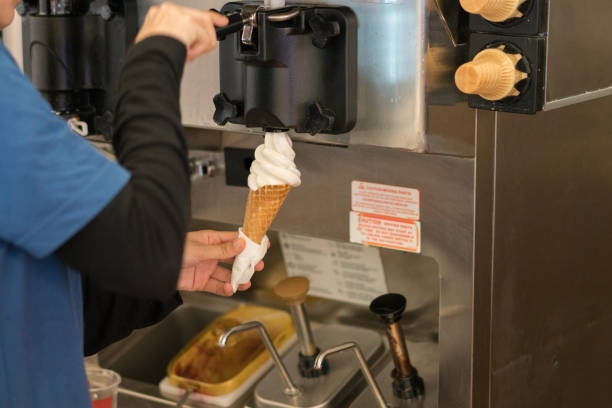
Directly from the freezing cylinder under pressure serves soft serve. As it passes the spigot, this pressure aids in the preservation of the aerated structure, producing the distinctive peak. It would fall if it were scooped like solid ice cream. Ensuring it lands in the cone or cup with the ideal, fluffy texture that defines the soft serve experience, the last step in preserving its unique, airy texture is the act of dispensing under pressure.
Reduced stabiliser and storage time
Though stabilisers are employed, the blend is created for quick use, not for long-term frozen storage. This enables a different ingredient balance than that of items created to endure temperature variations in a retail freezer. The texture is ideal as soon as it exits the machine, creamy, gentle, and perfectly temperature. This fresh concept is crucial; the texture would lose the very characteristics that make it unique if it were hardened and subsequently defrosted.
Conclusion
Achieved via a harmonic interaction of recipe science and accurate machinery, the unique texture of soft serve is really a masterpiece of gastronomic engineering is smooth, light texture comes from the higher serving temperature, more aeration, ongoing freezing method, and quick dispensing working together. The operation of an Ice Cream Machine centers on this special method that distinguishes it from other frozen sweets. For fans, this implies an incredibly silky and pleasurable experience. Tactile pleasure that is both known and unique, therefore explaining its never-ending and worldwide attractiveness.